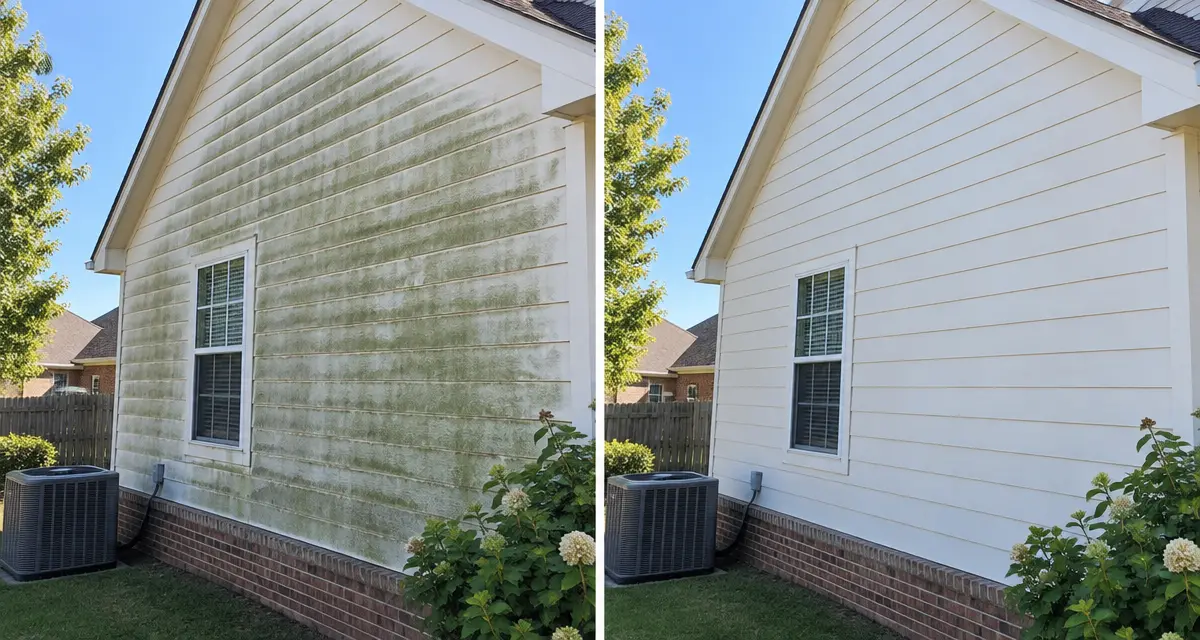
If you're noticing green, black, or dark stains on your home's siding in Norman, you're not alone. These unsightly blemishes are almost always a sign of biological growth, such as algae, mold, or mildew. Oklahoma's humid climate creates the perfect environment for these organisms to thrive. The safest and most effective way to remove them and restore your home's appearance is through a professional soft washing service.
What Are These Green and Dark Stains on My Siding?
The specific color and texture of the stains on your siding can tell you what you're dealing with. While they often grow together, understanding the culprits can help you appreciate the cleaning method required.
- Algae: This is the most common cause of green stains. Gloeocapsa magma, a type of airborne algae, travels through the air and latches onto surfaces. It thrives in damp, shady areas, which is why you'll often see it on the north-facing side of your house where there's less sunlight.
- Mold: Mold appears as black, brown, or dark green splotches and can have a fuzzy or slimy texture. It prefers moisture and can cause more significant issues than just discoloration. According to the U.S. Environmental Protection Agency (EPA), controlling moisture is key to controlling mold.
- Mildew: A type of mold, mildew often presents as a powdery or downy substance that is typically gray or white. It thrives on flat surfaces and loves the humidity we experience in the Norman area.
The Problem with Ignoring Siding Stains
Those green and black streaks are more than just an eyesore that hurts your home's curb appeal. If left untreated, this biological growth can lead to more serious and costly problems for Norman homeowners.
First, these organisms retain moisture. This constant dampness against your siding can accelerate wear and tear, lead to paint chipping and peeling, and even cause wood siding to rot over time. For materials like vinyl or stucco, the growth can cause permanent staining if not addressed.
Furthermore, mold growth on your home's exterior can be a concern for air quality, especially for individuals with allergies or respiratory sensitivities. While exterior mold is less of an immediate indoor threat, spores can enter your home through open windows or doors.
Why Soft Washing Is the Best Solution for Norman Homes
When faced with stained siding, many homeowners think of pressure washing. However, blasting your home with high-pressure water can do more harm than good. It can easily damage vinyl siding by cracking it or forcing water up underneath the panels, which can lead to trapped moisture and more mold growth. It can also strip paint and etch wood or brick.
This is why soft washing is the industry-standard method for cleaning siding. Our professional house washing service uses a very different approach. Instead of relying on force, soft washing uses a low-pressure stream of water, similar to a garden hose, to deliver a specialized cleaning solution. This solution is formulated to eliminate mold, algae, and mildew at the root, not just rinse the surface. After the solution has had time to work, we gently rinse it away, revealing a clean and sanitized surface.
This method is safer for every type of siding—including vinyl, wood, brick, and stucco—and provides a longer-lasting clean because it kills the organisms causing the stains.
DIY vs. Professional House Washing
It might be tempting to rent a pressure washer and try to tackle the job yourself, but this often comes with significant risks. Operating a pressure washer from a ladder is dangerous, and without proper training, it's very easy to cause permanent damage to your siding, windows, or landscaping. Mixing cleaning chemicals can also be hazardous if you don't know the proper ratios or which products are safe for your home and the environment.
A professional team like R&C Wash has the right equipment, commercial-grade cleaning solutions, and extensive training to do the job safely and effectively. We know how to protect your landscaping, windows, and electrical outlets while ensuring every inch of your siding is cleaned. Choosing a professional saves you time, prevents costly damage, and delivers superior results.
Maintaining Your Siding After Cleaning
Once your home is sparkling clean, a few simple steps can help keep the green stains from returning quickly.
- Improve Airflow: Trim trees, bushes, and shrubs so they are at least 18 inches away from your siding. This allows sunlight and air to reach the walls, helping them dry out faster after it rains.
- Redirect Water: Adjust sprinklers so they don't spray directly onto your house. Ensure downspouts are directing water away from your foundation.
- Keep Gutters Clean: Clogged gutters overflow, causing water to run down your siding. Regular gutter cleaning is one of the best ways to protect your siding and foundation from water damage.
- Regular Inspections: Periodically walk around your home to check for new stains or signs of moisture problems. Catching it early makes it much easier to manage.
Frequently Asked Questions
Is soft washing safe for my plants and pets?
Yes. A professional soft washing service takes precautions to protect your property. We pre-saturate plants and landscaping with fresh water and use carefully measured, biodegradable cleaning solutions. We ensure the area is thoroughly rinsed after the cleaning is complete.
How often should I get my house washed in Norman, OK?
A general recommendation is every 12 to 24 months. However, homes in heavily shaded or damp areas may require annual cleaning to keep biological growth at bay.
Can you remove all types of stains from siding?
Our soft washing process is specifically designed to eradicate biological stains like mold, algae, mildew, and general dirt. While it is highly effective, some non-organic stains like rust or artillery fungus may require a different treatment approach, which we can assess during an estimate.